2026 news
News

Mawatha in Ratlam, worry on one hand new system is becoming active

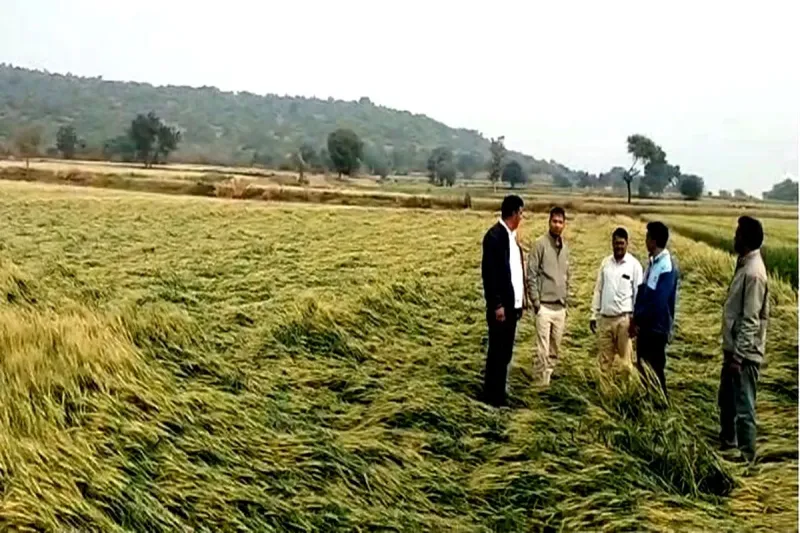
Ratlam. The unseasonal Mawtha rain on Tuesday morning has increased the worries of the farmers. Due to the wind that blew after the drizzle and heavy rain, the wheat crop growing in the fields of many farmers was uprooted. In many areas like nearby villages Dhikwa, Berchha, Kotdi, Sinod, Dhanesara Kamed, Bambori etc., drizzle and heavy rain at some places, uprooted the standing wheat crop. According to the weather department, there is an effect of cyclone, it will remain for two days, there will be moderate fog on Wednesday as well. On the other hand, a new system is getting activated in North-West India on 30th January. Farmers expressed their concern about the damage caused by rain.After the unseasonal rain in the nearby village Dhikwa, the wheat crop in the fields of Gopal Jat, Vikram Jat, Mukesh Jat, Kamal Singh Rajput, Pukhraj Malviya, Krishna Prajapat was damaged. On receiving the information, the Rural Agriculture Extension Officer along with the Revenue Department employees reached the spot along with the farmers and inspected the crop. Apart from this, along with many villages of Ratlam Rural, the rain has also increased the worries of the farmers in Jhantala and Alot of Riyawan. Farmers say that if the Mawtha had come a month earlier, the crops would have benefited. Now, the heavy rain is damaging the crops because the wheat ears are already full of grains. If a strong wind blows after the rain , the wheatis likely to be damaged by the wind. Three mm of rain fell during the day.During the drizzle on Tuesday morning, the city witnessed unseasonal rain in the afternoon, leaving the roads waterlogged. According to the Meteorological Department, 3 mm of rain was recorded in the city till 5.30 pm. While the day temperature dropped by 1.4 degree Celsius and the mercury reached 27.2 degrees. While the night temperature rose by 4.4 degree Celsius and reached 14.6 degrees.
100
News

Liquor worth Rs 1.75 lakh seized again in Bajna and Dhamnod

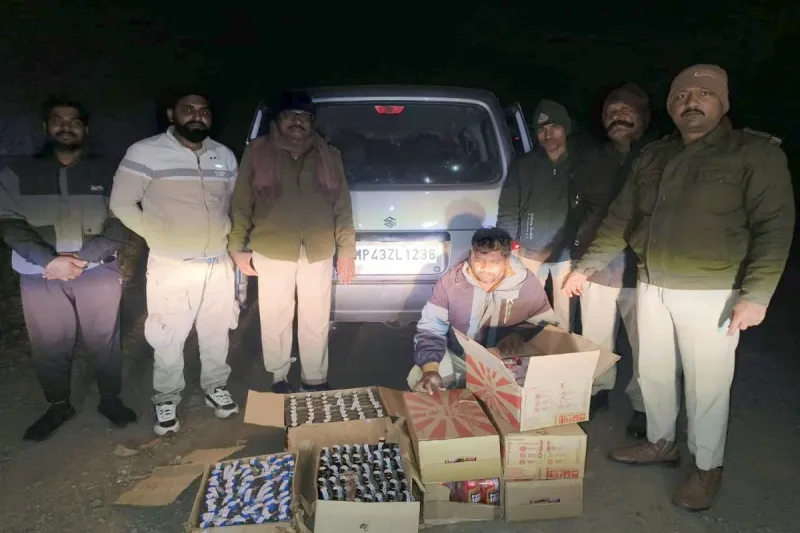
Ratlam. Bajna police have once again seized illegal liquor worth approximately 1.5 lakh rupees hidden in a hut. The accused has been arrested and a case has been registered against him and his absconding brother under the Excise Act. The accused’s other brother took advantage of the situation and escaped into the forest. Police are searching for him. This is the second time in four days that police have raided a house in the Bajna police station area and recovered a large quantity of illegally stored liquor. Meanwhile, Dhamnod police also recovered 30 thousand rupees of domestic and foreign liquor from a car under the Etelan on Ratlam-Banswara Road. Similarly, police from the Industrial Area police station have arrested a youth on charges of stealing a Bolero and a pickup and recovered the vehicles from him. Bajna police station in-charge Manish Dawar said that information was received from an informer that Deva, son of Dhuliya Charel, resident of village Jankara, had stored a large quantity of illegal liquor in a thatched hut built near his house. After the information, Deva, son of Dhuliya Charel, was caught by raiding the place mentioned by the informer, while his brother Suresh, son of Deva Charel, ran away into the forest on seeing the police. When chased, the accused dodged them and escaped. 51 cartons of beer were seized from the hut. The value of the liquor has been estimated at Rs 1,46,880. Dhamnod seized liquor worth Rs 30,000. On the other hand, the Dhamnod outpost police recovered 96 quarters of foreign liquor, 50 quarters of country liquor and 120 cans of beer worth Rs 30,000 from an Eco vehicle on Banswara Road under the Delhi-Mumbai Etlane Expressway. Outpost in-charge Sub Inspector Anand Bagwan said that the accused, Dinesh (36), son of Nandlal Pargi, a resident of Baydi Mohalla, Sailana, has been arrested and the car and liquor have been confiscated. The value of the seized liquor is Rs 30,000.

aajad news
News

Now the eternal ‘Deep Jyoti’ will burn with pure ghee at the Martyr’s Memorial.

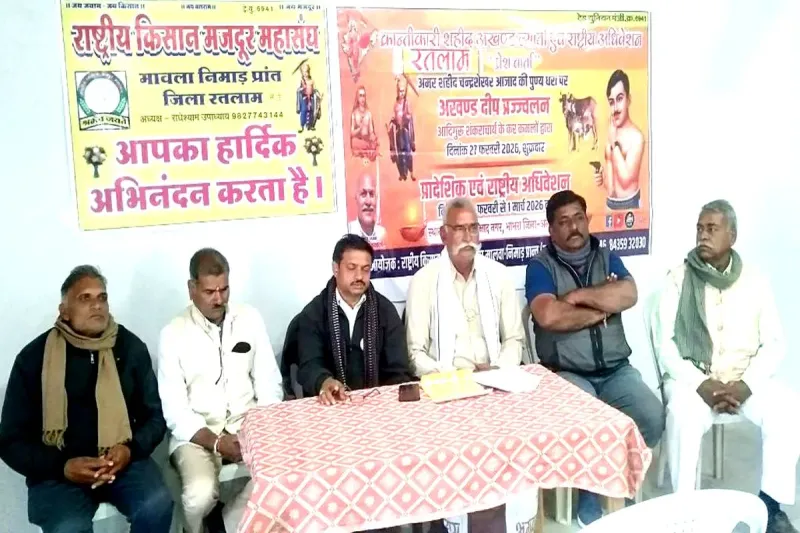
Ratlam. An eternal lamp will now be lit with pure ghee at the Martyr’s Memorial. It will be inaugurated by Adi Shankaracharya at a program scheduled for February 27th. An All India Kavi Sammelan will be held at the Martyr’s Memorial site in the evening, followed by a folk art and cultural program. A National Farmers Ratlam. An eternal lamp will now be lit with pure ghee at the Martyr’s Memorial. It will be inaugurated by Adi Shankaracharya at a program scheduled for February 27th. An All-India Kavi Sammelan will also be held at the Martyr’s Memorial site in the evening, following a folk art and cultural program. In Bhabra, the birthplace of Chandrashekhar Azad, the Rashtriya Kisan Mazdoor Mahasangh is lighting an eternal lamp with pure ghee. They are going from village to village, raising awareness for the eternal flame. They are collecting a spoonful of pure ghee from every household. The organization’s regional and national conventions will be held from February 26th to 28th. Ghanshyam Patel, Malwa Provincial President of the Rashtriya Kisan Mazdoor Mahasangh, stated this during a press conference held at the Ratlam Agricultural Produce Market. Present on the occasion were Provincial Organization Minister Gopal Patidar, State Vice President Lalsingh Bagwan, District President Radheshyam Upadhyay, Dashrath Patidar, Rajesh Purohit, Samarth Patidar, and others.

ratlam medical college latest news
News

Waiting for the start of PICU-SNCU worth Rs 4 crore in Medical College

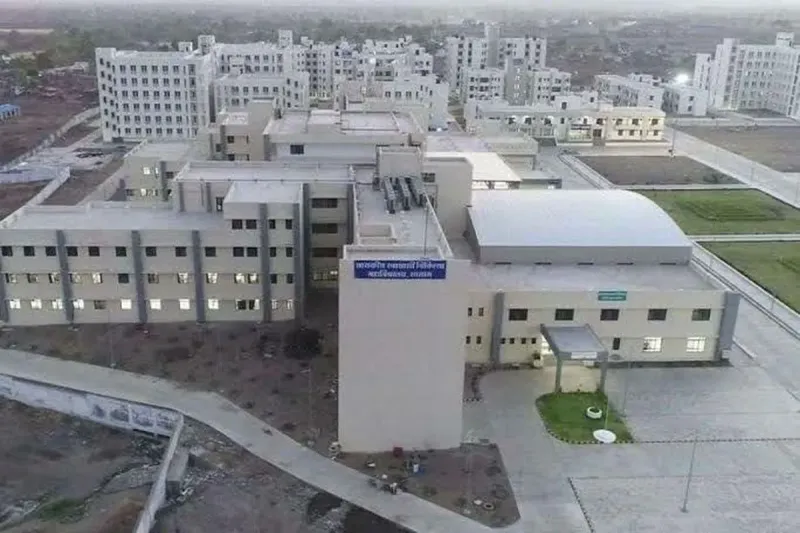
Everything is ready at Ratlam Medical College: beds, oxygen lines, equipment, doctors, and all the resources and facilities. All that’s left is for it to become operational. One step is holding up its launch, a fire NOC. The medical college initiated the process for the fire NOC six months ago, but it hasn’t been received yet. The situation is such that after such a long struggle, the 54-bed SNCU and PICU, costing around Rs 4 crore, are still awaiting commissioning. The college management isn’t entirely sure when the NOC will be received and when it can be commissioned. First cable, now NOC The PICU and SNCU at the medical college have been completed. Cables for emergency lighting were to be connected to the generator. The lack of cables had stalled the work for quite some time. The college management has secured approval from senior officials and installed the cables. Now, the fire NOC has stalled the work. The largest unit of the division will be The SNCU and PICU completed at the Medical College have the largest number of beds in any government or private hospital in the division. No other private or government hospital has this many beds. Even the District Hospital’s SNCU doesn’t have this many beds. Currently, the Medical College’s SNCU has 20 beds. This big facility was received from NHM Similar units have been established in medical colleges across the state. Funds for their construction were approved under the National Health Mission (NHM)’s ECRP scheme. Construction continued for nearly a year. Now that it’s complete, it hasn’t been operational. This is a major facility for newborns across the region.

whatsapp image 2026 01 28 at 9.37.34 pm
Festivals

Navratri

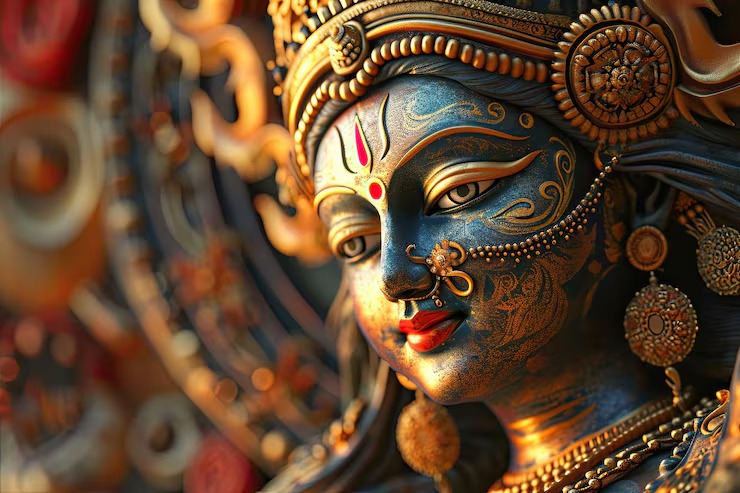
Navratri and Dussehra are two of the most vibrant and widely celebrated festivals in Ratlam, Madhya Pradesh, embodying devotion, culture, and the triumph of good over evil. These festivals are dedicated to Goddess Durga and her nine forms, celebrating feminine power (Shakti) and courage. Navratri spans nine nights, usually in the month of Ashwin (September–October), followed by Dussehra on the tenth day, which marks the victory of righteousness. In Ratlam, these festivals are celebrated with grandeur, enthusiasm, and community participation, making them a central part of the city’s cultural calendar. Spiritual and Cultural Significance Navratri signifies the nine-day worship of Goddess Durga, symbolizing the victory of virtue over vice and spiritual awakening. Each day is dedicated to a different manifestation of the Goddess, with devotees performing fasts, prayers, and rituals to seek her blessings for prosperity, protection, and wisdom. Dussehra, celebrated on the tenth day, commemorates Lord Rama’s victory over the demon king Ravana, representing the triumph of good over evil. In Ratlam, Dussehra is also associated with the immolation of Ravana effigies, accompanied by fireworks, music, and cultural performances, creating a festive and spiritually uplifting atmosphere.

urs festival in ajmer
Festivals

Urs Festival

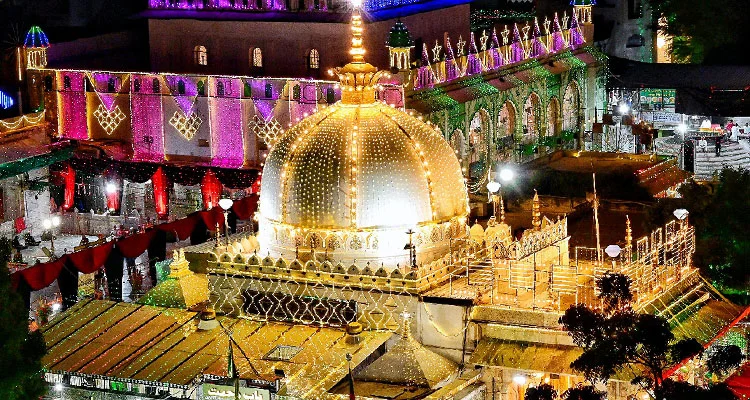
The Urs Festival is a significant and spiritually vibrant event celebrated in Ratlam, Madhya Pradesh, in honor of revered Sufi saints. The term “Urs” literally means “wedding” in Arabic, symbolizing the saint’s union with the divine. In Ratlam, the festival is observed at the shrines of Sufi saints and dargahs, drawing devotees from across the city and surrounding regions, regardless of religion, faith, or background. The Urs Festival is not only a religious event but also a celebration of peace, harmony, and devotion, reflecting the inclusive nature of Sufism. It is usually held on the death anniversary of the saint, commemorating their life, teachings, and spiritual contributions. Spiritual and Cultural Significance Urs represents the eternal journey of the soul towards God. Devotees believe that visiting the saint’s shrine, offering prayers, and participating in the rituals during Urs can bring blessings, spiritual peace, and fulfillment. The festival emphasizes love, humility, and devotion, core teachings of Sufi saints. In Ratlam, the Urs Festival serves as a symbol of communal harmony, as people from all communities join together in prayer, music, and festivities, embodying the Sufi philosophy of universal brotherhood.

whatsapp image 2026 01 28 at 8.51.05 pm
Festivals

Rath Yatra

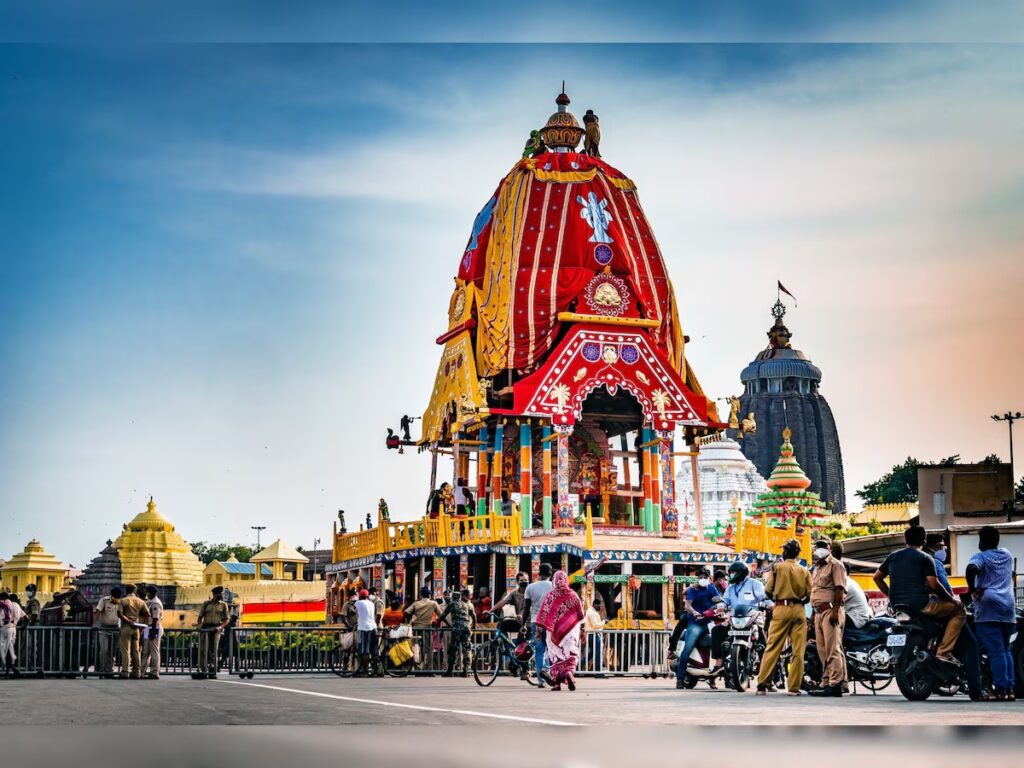
Rath Yatra, also known as the Chariot Festival, is one of the most vibrant and widely celebrated festivals in Ratlam, Madhya Pradesh. It is held in honor of Lord Jagannath, a form of Lord Krishna, along with his siblings Lord Balabhadra and Goddess Subhadra. This grand festival attracts thousands of devotees from Ratlam and surrounding regions who come to witness the magnificent procession and participate in the celebrations. The festival usually takes place in the Hindu month of Ashadha (June–July), with dates varying according to the lunar calendar. Rath Yatra symbolizes the journey of divinity among the people, fostering devotion, unity, and community spirit. Spiritual and Cultural Significance Rath Yatra holds deep religious importance. The festival commemorates the annual journey of Lord Jagannath from his temple to his aunt’s home (Gundicha Temple in Puri traditions). In Ratlam, the chariot procession allows devotees to feel closer to the deity, offering prayers, singing bhajans, and participating in rituals. The festival is also a symbol of inclusivity and devotion, as it allows people from all walks of life to pull the massive, beautifully decorated chariots and seek blessings. It represents the divine connection between God and devotees, showing that the lord is among his people, not confined to a temple.

watercolor hindu deity representation (1)
Festivals

Ganesh Chaturthi

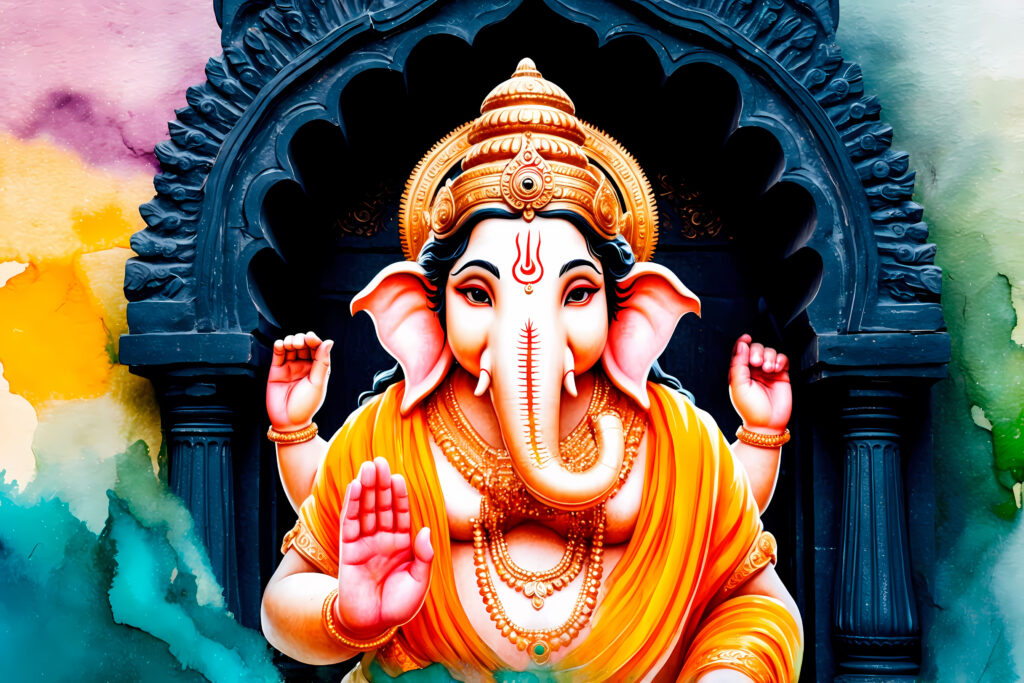
Ganesh Chaturthi is a grand and joyous Hindu festival celebrated to honor the birth of Lord Ganesha, the remover of obstacles and the god of wisdom, prosperity, and good fortune. The festival is observed on the fourth day (Chaturthi) of the bright fortnight (Shukla Paksha) in the Hindu month of Bhadrapada (August–September). It is especially celebrated with great enthusiasm across India, particularly in Maharashtra, Madhya Pradesh, Gujarat, Karnataka, and Andhra Pradesh. Lord Ganesha, the son of Lord Shiva and Goddess Parvati, is worshipped before beginning any new work or auspicious event. His elephant head symbolizes wisdom and understanding, while his large ears signify the importance of listening carefully and absorbing knowledge. Conclusion Ganesh Chaturthi is not just a festival but a celebration of hope, wisdom, and new beginnings. By worshipping Lord Ganesha with pure devotion, devotees seek blessings for success, happiness, and prosperity in their lives.

watercolor hindu deity representation
Festivals

Mahashivratri

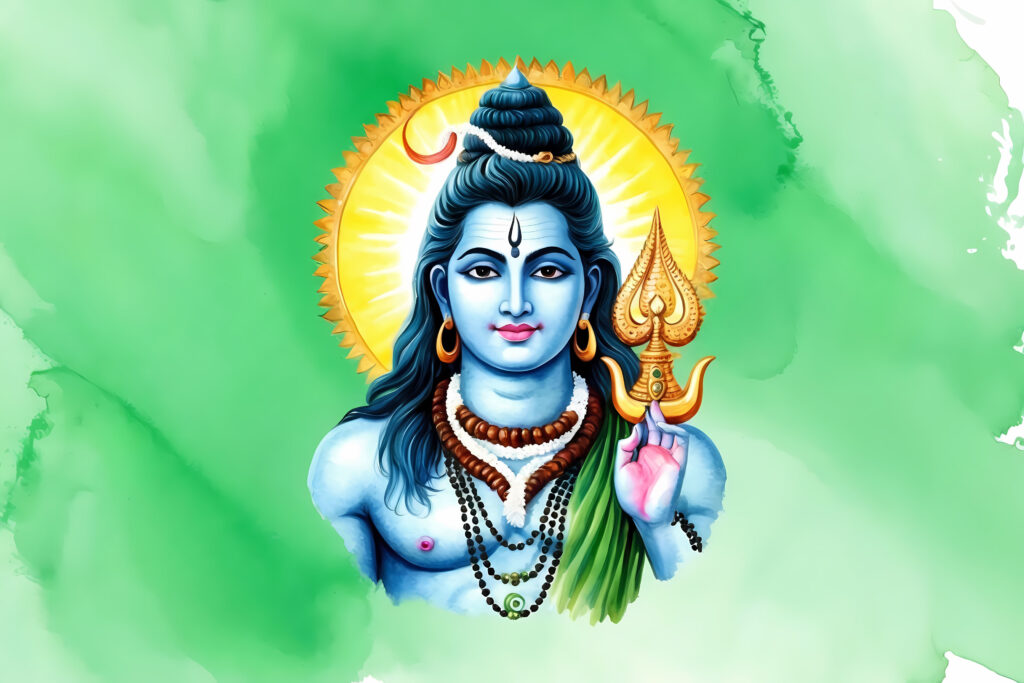
Mahashivratri, meaning “The Great Night of Shiva,” is one of the most sacred and spiritually powerful festivals in Hinduism. It is observed every year on the 14th night of the dark fortnight (Krishna Paksha) in the month of Phalguna (February–March). This holy night is dedicated to Lord Shiva, the supreme deity who represents destruction of evil, transformation, and inner awakening. Mahashivratri holds deep spiritual significance as it symbolizes the union of Shiva and Shakti, the coming together of consciousness and energy. Devotees believe that on this divine night, Lord Shiva performs the Tandava, the cosmic dance that maintains the rhythm of creation, preservation, and dissolution of the universe. Spiritual Significance Mahashivratri is not just a festival but a night of intense spiritual growth and self-realization. It is believed that cosmic energies are at their peak during this night, making it highly auspicious for meditation, chanting, and inner purification. Staying awake (Jagran) throughout the night helps devotees remain conscious and aware, symbolizing victory over ignorance and darkness. For yogis and spiritual seekers, Mahashivratri is a powerful time to align the body, mind, and soul. Lord Shiva is considered the Adi Yogi (first yogi), and this night is especially significant for practicing yoga, meditation, and spiritual discipline.